Design Talk with Lydia de Iorio
«Designing means letting go – and listening to the material.» A conversation with ceramic artist Lydia de Iorio.
Challenge: What are you currently working on in your studio – what is challenging you the most at the moment?
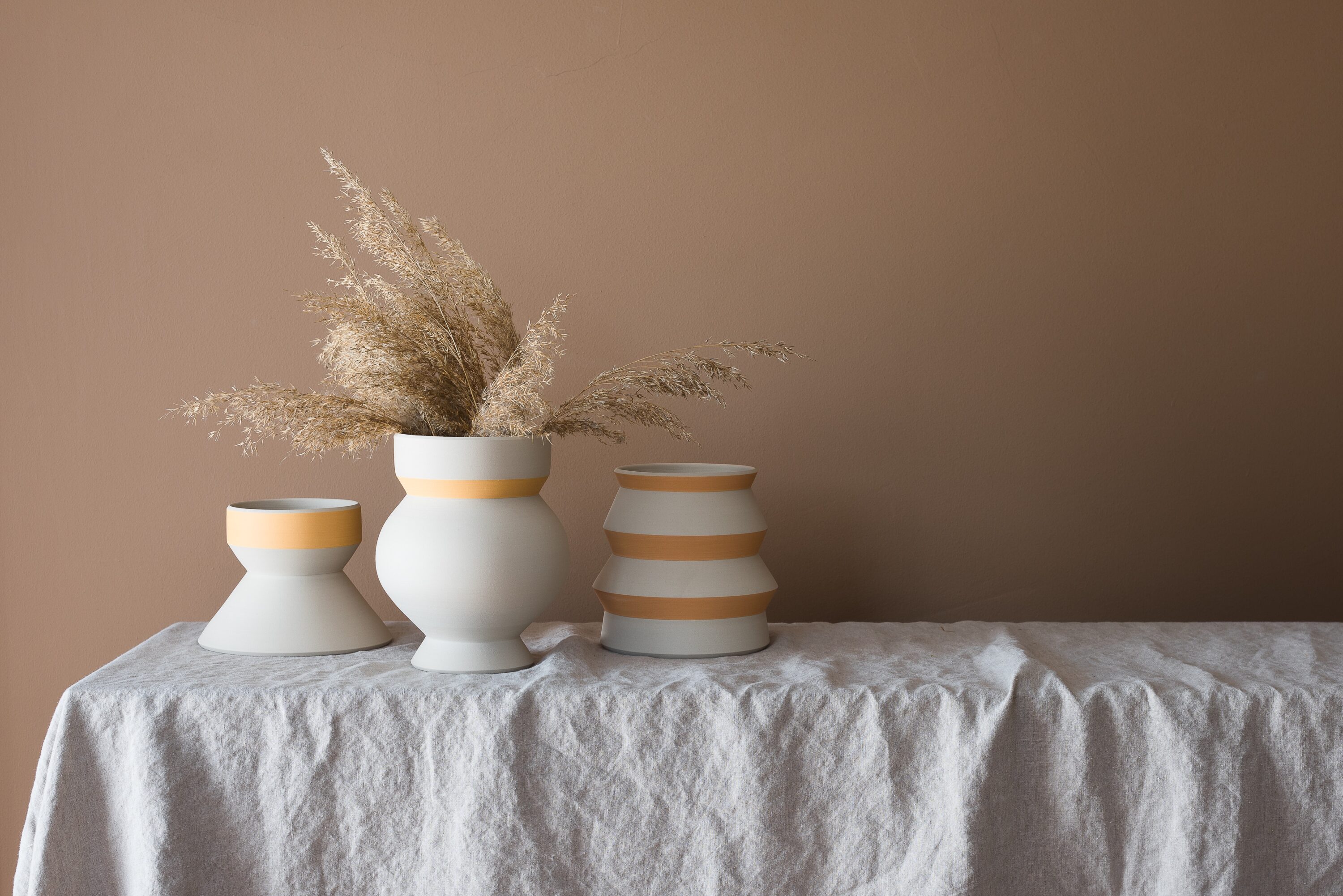
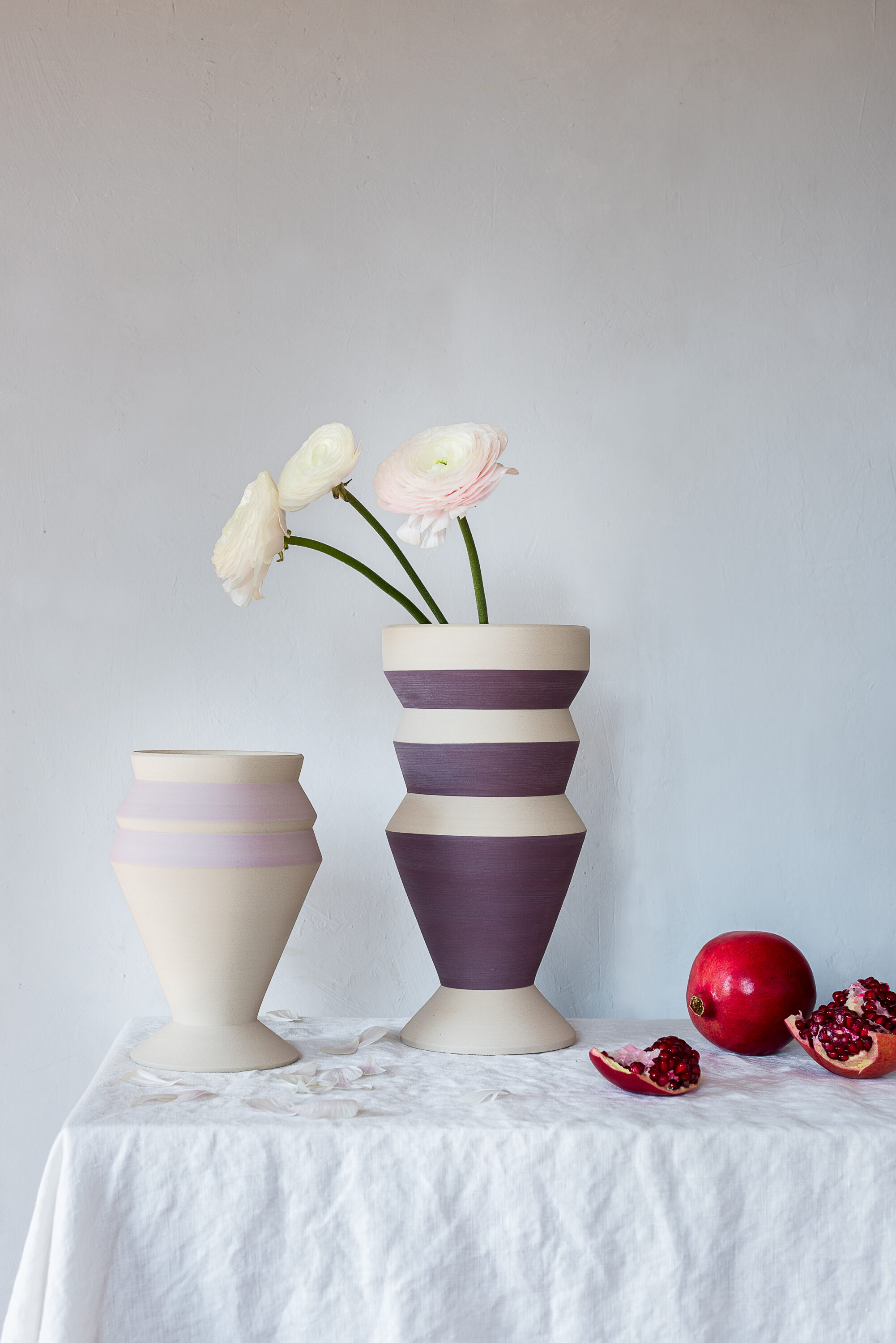
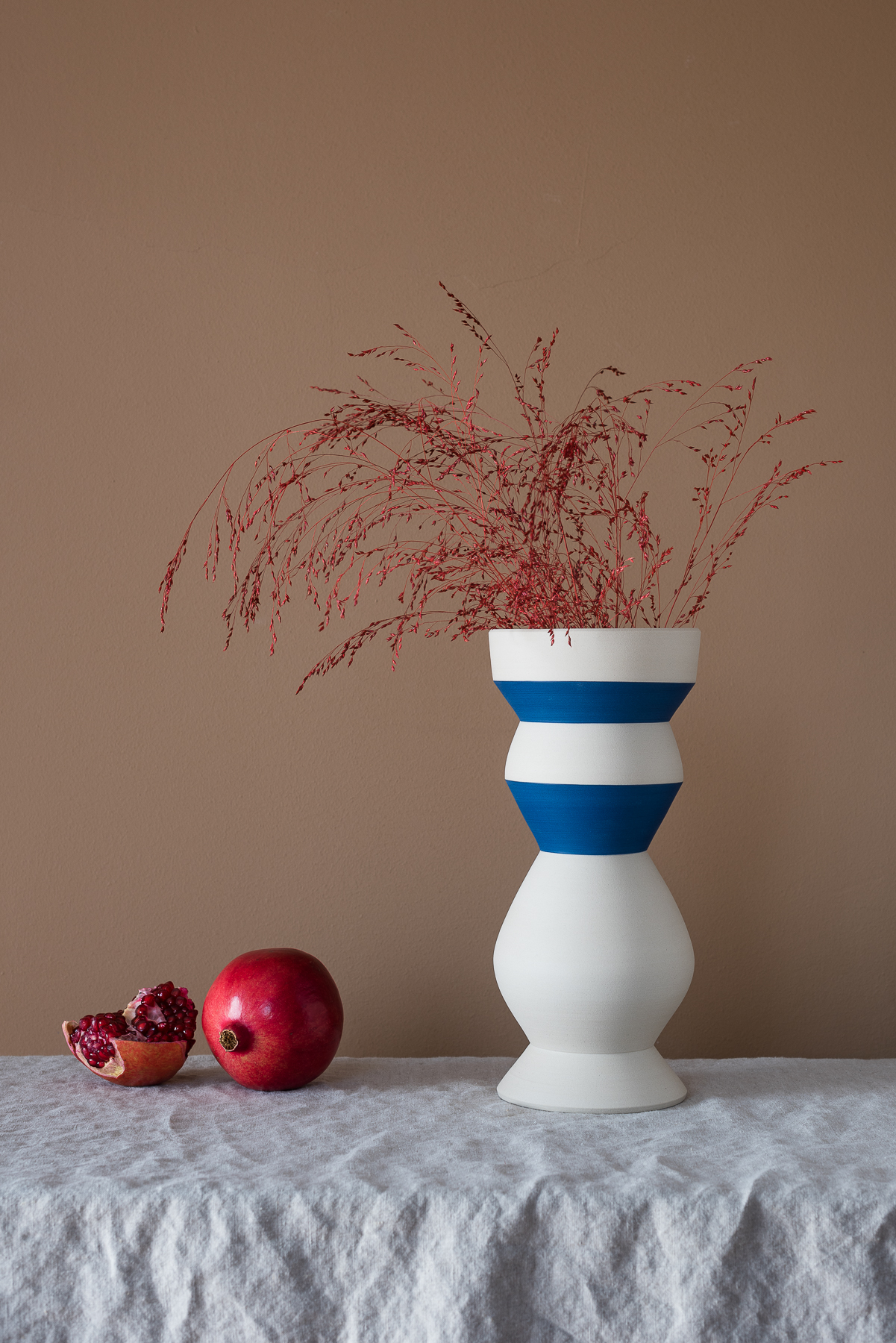
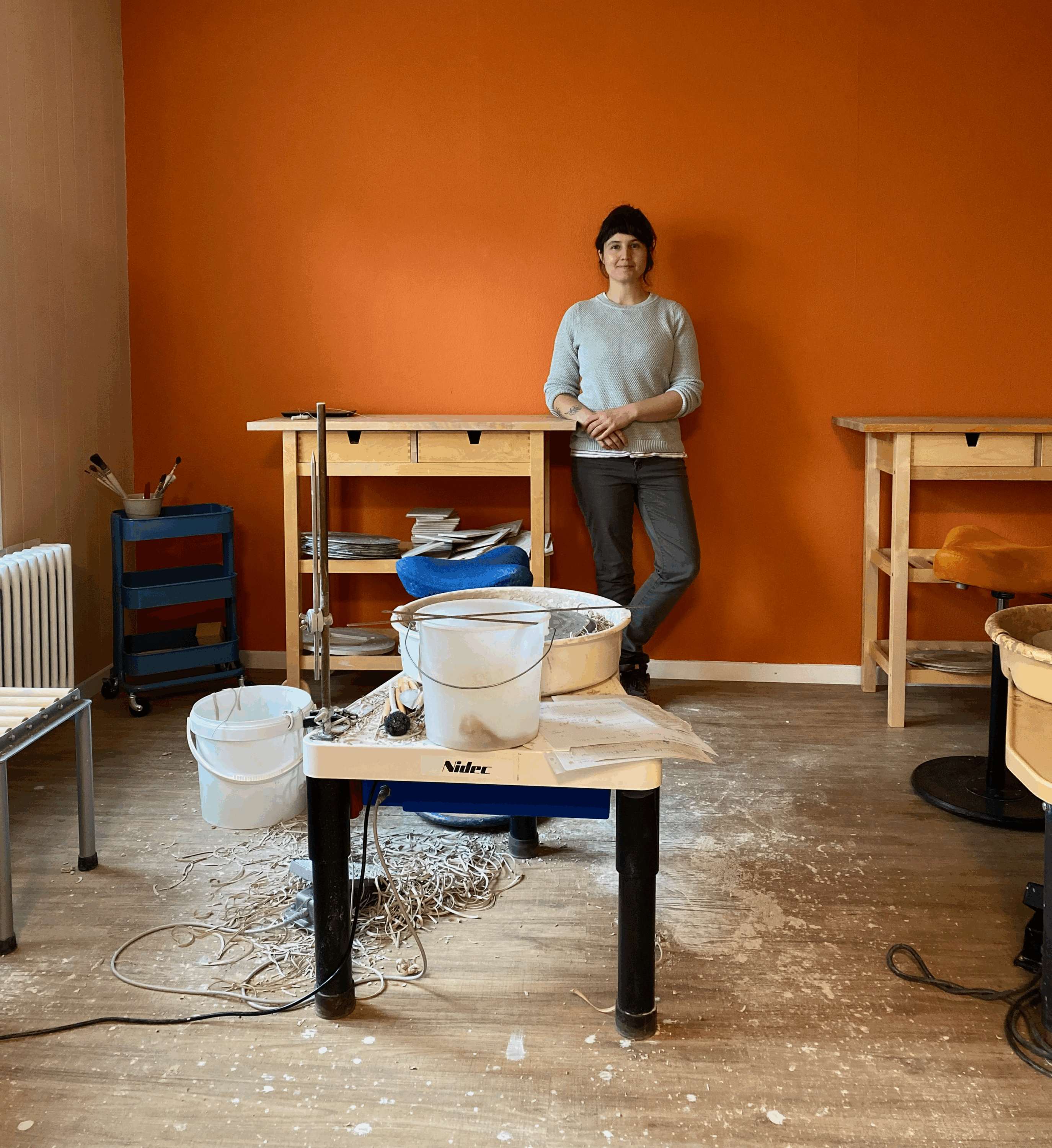
At the moment, I am working on various commissions – from a custom-made vase to a dog bowl and bespoke tableware. The biggest challenge is creating enough space to delve deeper into and realise my own creative themes – to fully immerse myself in something without feeling any time or financial pressure.
Passion: How does craftsmanship shape your approach as a designer, and what role does intuition play in it?
Craftsmanship has deepened my interest in materiality, production processes and the intrinsic value of objects. To design intuitively, one needs technical understanding and skill. Over time, the comprehension and mastery of craftsmanship itself becomes something intuitive – for me, craftsmanship and design are inseparably intertwined.
Wunsch-Kooperation: Who would you most like to collaborate with on a joint project?
I would love to work artistically with children and young people who have not had an easy start in life or who find themselves in difficult life situations. For this, I would like to collaborate with professionals from social and educational institutions to create a framework in which these young people can participate free of charge. That would be my dream collaboration.
In the craft and design field, I particularly enjoy working with chefs and florists – I love the challenge of translating their needs and expectations into ceramic form and creating something new together.
Vorbilder: Which designers or artists have influenced you on your path?
Honestly, I consciously protect my own space and want to develop my creative language as independently as possible. Not because I’m not interested in other designers – on the contrary: I’m very interested in how other people perceive the world around them and give it expression. But I need this retreat in order to create freely.
If I have to name someone, it would be Ettore Sottsass. I came across his work during my training. His pursuit of emotion, sensuality and poetry in design – and his conviction that design should go beyond pure functionality – that really resonates with me.
Dinner-Runde: Who from the design or art world would you like to sit down with – and what would you talk about?
If I could travel back in time, I would love to meet artists who were challenged by the invention of photography to rethink painting. This period of upheaval, with all its questions, uncertainties and possibilities, fascinates me deeply.
I would like to meet the Impressionists and pioneers of modernism – Paul Cézanne, Giovanni Giacometti, Cuno Amiet – and of course Ettore Sottsass, for the reasons mentioned above.
In the here and now, it would be Chiharu Shiota and Doris Salcedo, two very inspiring artists. I would love to learn more about their intentions – and perhaps discuss questions like: Can art heal – or does it touch wounds that simply want to be seen?
Does art need to be understood – or is it allowed to remain open so that everyone can find something of their own in it?
Hotspot: Which place in Langenthal inspires you most in your everyday life? – and if you think more broadly: which place in the world gives you energy for your work?
It’s not a specific place, but rather the nature in and around Langenthal that inspires me and does me good. Long walks and hikes in particular give me strength and inspiration. I especially love the silence, the light and the colours in the mountains.
Inspiration: Is there something you find only in Langenthal – something that flows directly into your work?
What I especially love about Langenthal is the interplay of water and forest. Of course, this exists in many other places as well – but it is a gift to experience it here every day.
It is the human experience, nature and togetherness that move me and flow into my work.
Tradition & Future: Ceramics is a centuries-old craft. Where do you see the future of this practice, especially in terms of sustainability?
For the future of ceramic craftsmanship, I hope that the focus will return more strongly to individual and personal ceramics – to the intention behind the work: For whom or for what is this piece created?
I wish for more conscious and resource-friendly creation – away from mass-produced goods and towards long-lasting objects with emotional value.
Material: What fascinates you most about working with ceramics?
I am fascinated by the wide range of the ceramic process – by how the consistency and properties of the material constantly change up to the final firing, and how the shaping steps must adapt to this transformation.
Event: Do you have any points of contact with the Design Preis Schweiz? If so, what does this event mean to you personally?
So far, I have not had any direct contact with the Design Preis Schweiz. However, I find it very valuable that there is a platform that makes Swiss design craftsmanship visible and honours it.
You have been self-employed for several years and work a lot – where do you draw your daily motivation from?
It’s not always easy – especially the financial pressure, which is sometimes easier and sometimes harder to bear. And yet it is my greatest wish and intention to follow my abilities and creative interests uncompromisingly.
It is a constant tension between creative willpower, gratitude and reality – something that exhausts me but also drives me.
Zeitreise: If you look back in ten years – what traces would you like your work to have left behind?
As long as I live, I want to encourage people to listen to the voice of their heart – even when everything speaks against it, or when it is linked to pain, loneliness or other sacrifices.
I hope that my work leaves traces that encourage others to be courageously themselves and to follow their heart’s voice.